
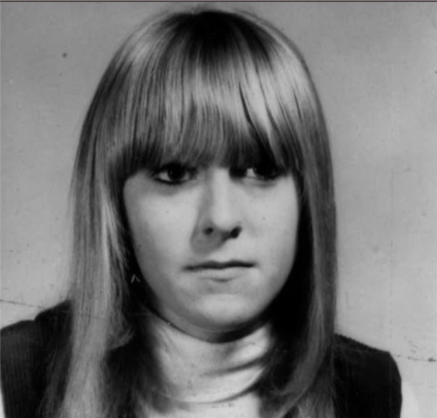
Suspect identified in 1960s homicide investigation
LONDON, ON (November 23, 2026) – Members of the London Police Service Major Crime Section have solved a cold case dating back to the 1960s following an extensive review of historical evidence and the use of modern DNA technology.
Through advancements in forensic science and re-examination of evidence, investigators have now positively identified the individual responsible for the homicide of 16-year-old Jacqueline (Jackie) Dunleavy.
On Tuesday, January 9, 1968, Jackie Dunleavy was working at the Stanley Variety Store on Stanley Strreet at Wharncliffe Road. She finished work at 6:35 p.m. and was last seen walking out the front of the store. At 8:10 p.m., three youths found Jacqueline at the Katherine Harley School (today's Matthews Hall) on Oxford Street, west of Sanitorium Road. Upon arrival of the London police, she was pronounced dead.
Our investigation found that the cause of Jackie's death was homicide. Although she had suffered a head injury, the cause of death was strangulation.
Jackie was a 16-year-old grade 10 student at Westminister Secondary School when she was murdered.
Forensic testing conducted at the time identified biological evidence, which became central to the investigation. Despite extensive investigative efforts, the case remained unsolved for decades.
Today, although the suspect is deceased, members of the London Police Service are naming him publicly in the interest of transparency, accountability, and providing answers to those impacted by this investigation.
Investigators were able to positively confirm the identification through DNA analysis, which established with certainty that the suspect was responsible for the offence. This confirmation met the threshold that would normally be required to proceed with criminal charges.
However, the suspect passed away prior to this identification being made. Had he been alive today, investigators confirm that he would have been arrested and charged in relation to this homicide.
Members of the London Police Service Major Crime Section have identified XXX as the individual responsible for the 1968 homicide of Jacqueline Dunleavy. The investigation determined that XXX was responsible for the offence; however, he died on XXX. As a result, no charges will be laid in this matter.
“This is a first for the London Police Service,” said Chief Thai Truong of the London Police Service. “Our investigators showed extraordinary dedication and persistence in solving a case that had remained unresolved for far too long. Their work speaks to the integrity of this service and our commitment to pursuing the truth, no matter how much time has passed.”
“This identification is grounded in evidence and demonstrates what is possible when older cases are revisited with fresh eyes and modern scientific tools,” said XXX, XXX of the London Police Service. “The fact that criminal charges cannot be laid is a practical limitation only, due to the suspect’s death. It does not diminish the strength or certainty of the evidence that led to this conclusion.”
The investigation involved the careful preservation and re-testing of forensic material originally collected decades ago, combined with modern DNA analysis techniques that were not available at the time of the original investigation. The results allowed investigators to conclusively link the suspect to the crime.
“This investigation shows that time does not erase responsibility. Our Major Crime detectives pursued the truth relentlessly, and modern DNA science allowed them to confirm what had remained unanswered for decades,” said XXX, XXX of the London Police Service. “Although charges cannot be laid due to the suspect’s death, this identification meets the threshold we use to proceed criminally. This moment belongs to the investigators who never gave up, and to the principle that justice does not expire.”
The London Police Service acknowledges that naming a deceased suspect is a significant decision and one that is not taken lightly. In this case, the decision was made because investigators reached a level of evidentiary certainty that would have justified criminal charges, had the suspect been alive. The naming of the suspect is intended to correct the historical record, reinforce public confidence in evidence-based policing, and provide answers that have been sought for decades.
While there are no further investigative steps anticipated, London Police Service recognizes the significance of this development for surviving family members and the broader community. Support resources have been made available to those impacted by