
- The London Police Service remains committed to pursuing the truth, no matter how much time has passed.
- Unsolved homicides are not forgotten. They can be revisited when new information, evidence or investigative opportunities become available.
- In this case, investigators reached a point where the evidence would have supported criminal charges had the suspect still been alive.
- While criminal proceedings are no longer possible, identifying the person responsible provides long-awaited answers about what happened to Jacqueline “Jackie” Dunleavy.
- This investigation is a reminder that the passage of time does not diminish our responsibility to victims or their families.
Major Crime SectionForensic Investigative
Forensic Investigative
Genetic Genealogy
New investigative possibilities through DNA science and genealogical research. A feature on historical investigations, the people at their centre and the search for answers.
01 / Understanding FIGG
What is Forensic investigative genetic genealogy?
Forensic Investigative genetic genealogy (FIGG) uses DNA analysis, private-sector genetic databases and genealogy to help identify persons of interest in unresolved murder investigations.
02 / The science
Understanding the FIGG process.
- 01Obtain and extract useable DNA from crime scene
- 02STR profiling of the crime scene DNA extract
- 03Search the National DNA Data Bank and other DNA databanksIf a match is found, IGG is not pursued.No match ↓
- 04SNP sequencing of unknown DNA sample for upload on a private sector DNA database
- 05Search private sector DNA database for a direct or partial match
- 06For partial matches found: Build a family tree back to a common ancestor using genealogical research methods
- 07Narrow leads using non-genetic methods
- 08Narrow leads using voluntary DNA, the DNA surveillance tactic, and STR profiling against crime scene DNA sample
- 09Seek judicial authorization fora DNA warrant
- 10STR profiling of suspect DNAagainst crimescene DNA sample
Source: Information and Privacy Commissioner of Ontario, Guardrails for Police Use of Forensic Investigative Genetic Genealogy in Ontario, June 2025, pp. 6–9.
View original flowchart (p. 6) ↗
03 / Cold case investigations
Cold Case Homicide 66-1101
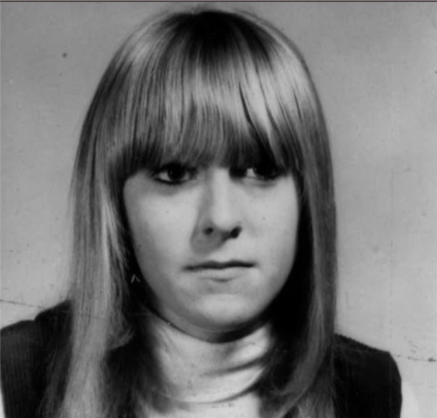
Jackie Dunleavy
A 16-year-old London teenager.
Explore Jackie’s caseClose Jackie’s case
Jackie Dunleavy
A 16-year-old London teenager.
Explore Jackie’s caseClose Jackie’s caseEXPLORE THE CASE
January 9, 1968
On Tuesday, January 9, 1968, Jacqueline Dunleavy was working at the Stanley Variety Store on Stanley St at Wharncliffe Rd. She finished work at 6:35pm and was last seen walking out the front of the store. At 8:10pm, three youths found Jacqueline at the Katherine Harley School (today’s Matthews Hall) on Oxford St west of Sanitorium Rd. Upon arrival of the London Police Force she was pronounced dead.
Our investigation found that the cause of Jacqueline's death was homicide. Although she had suffered a head injury, the cause of death was strangulation.
Jacqueline was a 16-year-old grade 10 student at Westminister Secondary School when she was murdered.